Spray Foam Insulation Tax Credit 2025: How to Save Thousands Before the Deadline
Discover how to claim the spray foam insulation tax credit 2025 — up to $1,200 back on qualifying open-cell and closed-cell spray…
Read guide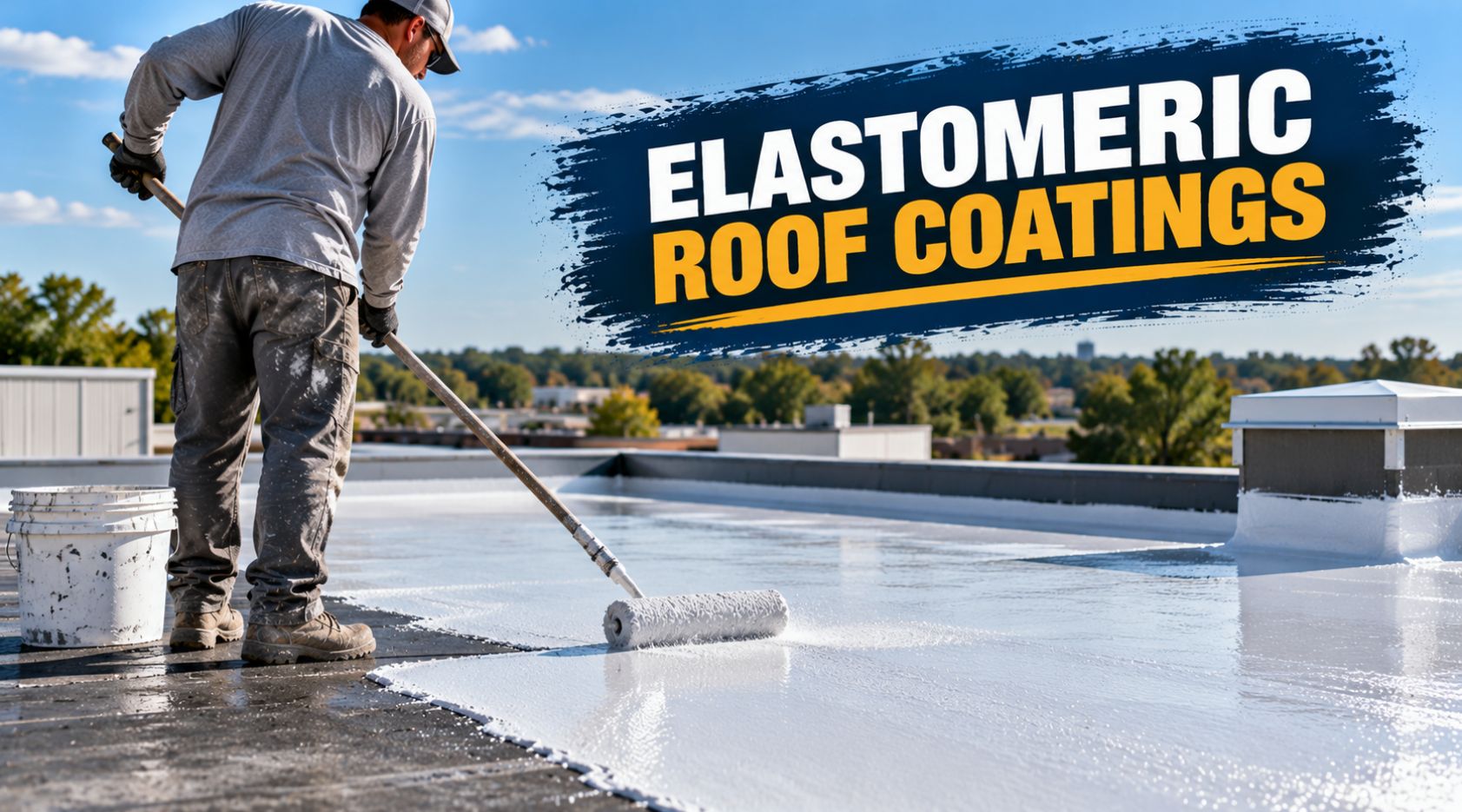
Most roofs do not fail overnight. They age. The sun bakes the surface, rain finds a hairline crack, the roof expands in the afternoon heat and shrinks again at night, and little by little the waterproofing gives up. By the time a ceiling stain shows up inside, the damage has usually been building for years.
Replacing the whole roof is the answer many owners assume they are stuck with. It is also expensive, noisy, and wasteful, because it sends a lot of material to the landfill. For roofs that are still structurally sound, there is often a smarter move: a liquid applied elastomeric roof coating that seals, protects, and extends the life of what you already have.
This elastomeric roof coatings guide explains what these coatings are, how the main types differ, what they cost, how long they last, and how to avoid the mistakes that cause most coating failures.
An elastomeric roof coating is a thick, liquid applied membrane that cures into a seamless, flexible, rubber like layer on top of your roof. The word “elastomeric” simply means it can stretch and return to its original shape. A good coating can elongate several hundred percent before it breaks, which is what lets it handle the constant expansion and contraction every roof goes through.
Because it is applied as a liquid, it flows into small cracks and around fasteners, vents, and penetrations. Once it cures, there are no seams to peel apart. That seamless quality is the main reason coatings are popular for flat and low slope roofs, where water likes to sit and seams tend to be the weak point.
A quick clarification, since the industry uses the term loosely: “elastomeric” describes a performance trait, not a single product. Acrylic, silicone, and polyurethane coatings can all be elastomeric. They behave very differently, though, which is why choosing the right one matters so much.
Coatings are not magic, but when they are the right fit, the benefits are real.
They extend roof life. A properly applied coating adds a fresh protective layer and can add years of service to an aging roof.
They seal leaks and small defects. The liquid fills hairline cracks and gaps and bonds around flashing and penetrations.
They reflect sunlight. White and light colored coatings bounce a large share of solar heat away from the roof. That can lower roof surface temperatures, reduce cooling demand, and ease thermal stress on the roof system. Many reflective products carry third party ratings, such as Cool Roof Rating Council listings or ENERGY STAR, so look for those if energy performance matters to you.
They cost less than replacement. Coating a roof generally costs far less than tearing off and replacing it, and the work is usually faster and less disruptive to the people using the building.
They reduce waste. Keeping the existing roof in place means less material hauled to a landfill.
They can help with warranties. Many manufacturers offer warranties on coating systems installed by approved contractors, which gives owners a documented safety net.
There are three primary chemistries that cover most projects. Each has real strengths and real limits.
Acrylic is the most common and most budget friendly choice. It is water based, easy to apply, and highly reflective, which makes it a favorite for cool roof projects.
Best for: roofs that drain well, with no standing water.
Strengths: lower cost, strong UV resistance, bright reflectivity, simple application, and it can be brushed, rolled, or sprayed.
Limits: acrylic does not like ponding water. Because it is water based, it can soften and break down if water sits on it for long stretches. Cold weather is another issue. Temperatures at or below about 50°F can slow the cure and hurt adhesion. Acrylic systems also often call for a primer, two coats, and reinforcement at details.
Typical lifespan: roughly 10 years, and in the range of 10 to 15 years on a well drained roof when applied at proper thickness.
Silicone is the go to option when water is a problem. Once cured, it forms a highly water resistant membrane that does not soften under standing water. It also holds up very well against UV exposure.
Best for: dead flat roofs, roofs with ponding, aging single ply membranes, and metal roofs that need long term protection.
Strengths: excellent ponding water resistance, excellent UV stability, flexibility across a wide temperature range, and it typically cures well even in humid conditions. Many silicone products are primerless on common substrates.
Limits: it generally costs more than acrylic, it tends to attract dirt over time, and once a roof has been coated with silicone, other coating types usually will not bond to it. That makes the decision close to permanent, so choose with care.
Typical lifespan: often 15 to 20 years at proper thickness.
Urethane coatings are known for toughness. They handle foot traffic, hail, and abrasion better than most alternatives, and they resist dirt pickup so they stay cleaner looking. They are strong enough to follow the natural movement of a roof and tolerate some ponding, though they are not a long term answer for permanent standing water.
Best for: roofs with regular foot traffic, equipment areas, and spots that take a beating.
Strengths: high durability, good abrasion resistance, good flexibility, and decent chemical resistance. Urethane is also commonly used as a base coat in restoration systems, with a reflective topcoat on top.
Limits: reflectivity is usually a step below acrylic and silicone, and application can be more technical.
Butyl coatings and some modified asphalt coatings fill smaller niches. Butyl, for example, works well on certain metal, modified bitumen, single ply, and built up roofs. If your roof has an unusual substrate or a history of problems, a manufacturer or qualified roofing professional can point you to the right chemistry.
| Feature | Acrylic | Silicone | Urethane |
|---|---|---|---|
| Ponding water | Poor, drainage required | Excellent | Good for incidental ponding |
| UV resistance | Very good | Excellent | Good |
| Reflectivity | Excellent | Excellent | Moderate |
| Foot traffic and abrasion | Fair | Fair | Excellent |
| Cold weather application | Limited | Better | Varies by product |
| Relative cost | Lowest | Mid to higher | Mid to higher |
| Typical lifespan | About 10 to 15 years | About 15 to 20 years | Varies, often durable |
| Can be recoated with other types | Often yes | Usually only silicone | Often yes |
The simplest rule of thumb: if water ever sits on your roof for more than a day or so after rain, lean toward silicone. If drainage is good and you want the lowest cost, acrylic is hard to beat. If the roof gets walked on a lot, urethane deserves a serious look.
Pricing varies by region, roof condition, and system, and published numbers do not always agree. As a general planning range, installed cost for most elastomeric coating projects falls somewhere between about $1 and $5 per square foot. Here is how it tends to break down:
Several things move the number up or down:
Always compare quotes by scope. Ask what thickness is being applied in mils, what prep is included, and which products are named. A low bid with a thin application often costs more in the long run.
Thickness is measured in mils, with one mil equal to one thousandth of an inch. It is one of the most important numbers in any proposal, and one of the easiest to shortchange.
For roofs, manufacturers commonly call for around 20 to 30 dry mils or more, depending on the product and the technical data sheet. Walls and lighter duty surfaces can get by with less. A useful detail is that wet thickness and dry thickness are not the same. A coating that is 50 percent solids by volume will need roughly twice the wet film thickness to reach a given dry thickness.
Coverage is usually quoted in gallons per 100 square feet per coat, and it varies with product solids and the roof surface. Rough or porous roofs soak up more material than smooth ones. The technical data sheet for your product is the final word, and a good contractor will measure wet film thickness during application.
Elastomeric coatings work on a wide range of substrates, including:
Not every roof is a good candidate. A coating is a maintenance and restoration tool, not a cure for a roof that is already failing from the inside. If the insulation is wet, the deck is deteriorated, or the membrane is badly blistered or delaminated, coating over it just hides the problem. A moisture survey before the project is cheap insurance, because trapped moisture under a new coating is one of the fastest ways to a failure.
Exact steps vary by product, but a quality job follows a sequence like this.
Weather matters throughout. Most products need dry conditions and temperatures within a stated range, and rain too soon after application can wash away or ruin uncured acrylic.
A coated roof is not maintenance free, but it is close. Plan on a simple routine:
A coating is a strong choice if your roof is structurally sound, free of widespread wet insulation, and showing normal signs of aging such as chalking, hairline cracks, and minor leaks. It is a particularly good fit for low slope commercial buildings, metal roofs, and flat residential roofs, where a seamless membrane makes the most difference.
It is the wrong choice if the roof has reached the end of its structural life, if moisture is widespread underneath, or if the existing surface will not hold a bond. In those cases, repair or replacement is the honest answer, and a good contractor will tell you so.
When in doubt, ask for a professional inspection, request product data sheets, and get the thickness, prep, and warranty terms in writing before work begins.
What is an elastomeric roof coating?
It is a liquid applied, flexible waterproofing membrane that cures into a seamless, rubber like layer on a roof. It stretches and returns to shape, which helps it handle thermal movement, seal small cracks, and protect the roof from sun and water.
How long do elastomeric roof coatings last?
It depends on the chemistry and how well the job is done. Acrylic coatings commonly last around 10 to 15 years on well drained roofs, while silicone systems often last 15 to 20 years. Thickness, prep, climate, and maintenance all affect the result.
Can I use elastomeric coating on a roof with ponding water?
Silicone is the usual choice for roofs where water sits, because it stays stable under standing water. Acrylic coatings are generally not recommended for ponding conditions, since they can soften and break down.
What is the difference between acrylic and silicone roof coatings?
Acrylic is water based, more affordable, and very reflective, but it needs good drainage. Silicone costs more but handles standing water and UV exposure extremely well. Silicone also limits future recoating options because other coating types usually will not stick to it.
How much does it cost to coat a roof?
Most projects fall roughly between $1 and $5 per square foot installed, depending on the coating type, roof condition, prep needs, and thickness. Get itemized quotes that list thickness and products so you can compare fairly.
Can elastomeric coating stop an active leak?
It can seal small cracks and minor defects, but it is not a cure for major structural problems or wet insulation. The cause of the leak should be found and repaired first, then the coating applied over a sound, dry surface.
What temperature is needed to apply roof coating?
Most products have a specified range. Water based acrylics generally struggle at or below about 50°F, and no coating should be applied when rain is expected before it cures. Always follow the manufacturer’s data sheet.
Do reflective roof coatings really lower energy bills?
White and light colored coatings reflect more sunlight and reduce roof surface temperature, which can lower cooling demand, especially in hot climates and on buildings with little roof insulation. Results vary by climate and building, so check for CRRC or ENERGY STAR ratings when energy savings are a goal.
Can I apply elastomeric roof coating myself?
Small, simple roofs can sometimes be done by capable DIYers, but proper prep, correct thickness, and weather timing are easy to get wrong. For larger or commercial roofs, and for any project where a manufacturer warranty matters, professional installation is the safer route.
Get a free, no-obligation quote from a seal coating specialist — it takes about a minute.
Discover how to claim the spray foam insulation tax credit 2025 — up to $1,200 back on qualifying open-cell and closed-cell spray…
Read guide
Sealant coatings play a crucial role in protecting surfaces from damage. These coatings provide a barrier that prevents water, chemicals, and other…
Read guideGet a free quote in about a minute — or find out what it takes to start spraying seal coatings yourself.